Get the mortar mix ratio wrong and the job either cracks, crumbles or fails to bond. Mix it too strong and a hard mortar can damage softer bricks as the wall moves; mix it too weak and it will not hold the masonry or the weather. This guide sets out the standard UK sand to cement ratios for bricklaying, pointing, blockwork and rendering, when to add lime or plasticiser, and why older buildings usually need a lime mortar instead of cement.
Ratios here are given as parts by volume (for example 4:1 means four parts sand to one part cement). Measure by the bucket or the gauge box, not by the shovel, because shovel loads vary too much to be consistent.
Quick reference: which mortar mix ratio to use
| Job | Mix (sand : cement) | Notes |
|---|---|---|
| General bricklaying, above DPC | 5:1 with plasticiser | The everyday domestic mix |
| Hard or engineering bricks, below DPC, chimneys, exposed work | 4:1 with plasticiser | Stronger, more durable, less breathable |
| Soft or handmade bricks, sheltered work | 6:1 with plasticiser, or add lime | Weaker so it does not damage the brick |
| Concrete blockwork | 5:1 or 6:1 with plasticiser | Match strength to the block |
| Pointing and repointing (modern brick) | 4:1 to 5:1 | Use a slightly drier mix |
| Render scratch/backing coat | 4:1 or 1:0.5:4.5 with lime | Strongest coat, goes on first |
| Render top coat | 5:1 to 6:1 | Always weaker than the coat below |
| Older or solid-wall buildings | NHL lime mortar, no cement | Breathable and flexible, see below |
Costs vary by region and supplier, so treat any price here as a rough guide and check your local merchant.
The cement, lime and sand basics
A standard cement mortar is just building sand and ordinary Portland cement (general purpose grey cement) mixed with clean water. Building (soft) sand gives the smooth, workable mortar you want for laying bricks. Sharp or grit sand is coarser and is used in the stronger backing coats of render and in screeds. Add coarse aggregate (ballast) to that sand and cement and you no longer have mortar but concrete, a different material for slabs and footings that is mixed to its own ratios: see our guide to how to mix concrete.
Two things change the character of the mix:
- Plasticiser entrains tiny air bubbles that make the mortar buttery and easier to spread, improve frost resistance and reduce water in the mix. Use a purpose-made bricklaying plasticiser such as Febmix or Cementone, dosed per the bottle (typically a small capful per mixer load). Do not use washing-up liquid as a substitute, it is not designed for the job and can weaken the mortar.
- Hydrated lime does a similar job to plasticiser but also makes the set mortar more flexible and more breathable. A common gauged mix is 1 cement : 1 lime : 6 sand. Lime mixes suit softer or older bricks because they accommodate movement instead of cracking.
You generally use one or the other. Plasticiser is the quick, cheap route for everyday modern brickwork; lime is preferred where breathability and flexibility matter.
A note on bagged mortar
Pre-blended bagged mortars take the guesswork out of small jobs and repairs, but for anything more than a couple of bags it is cheaper to buy sand and cement separately and gauge your own.
Bricklaying mortar mix ratios
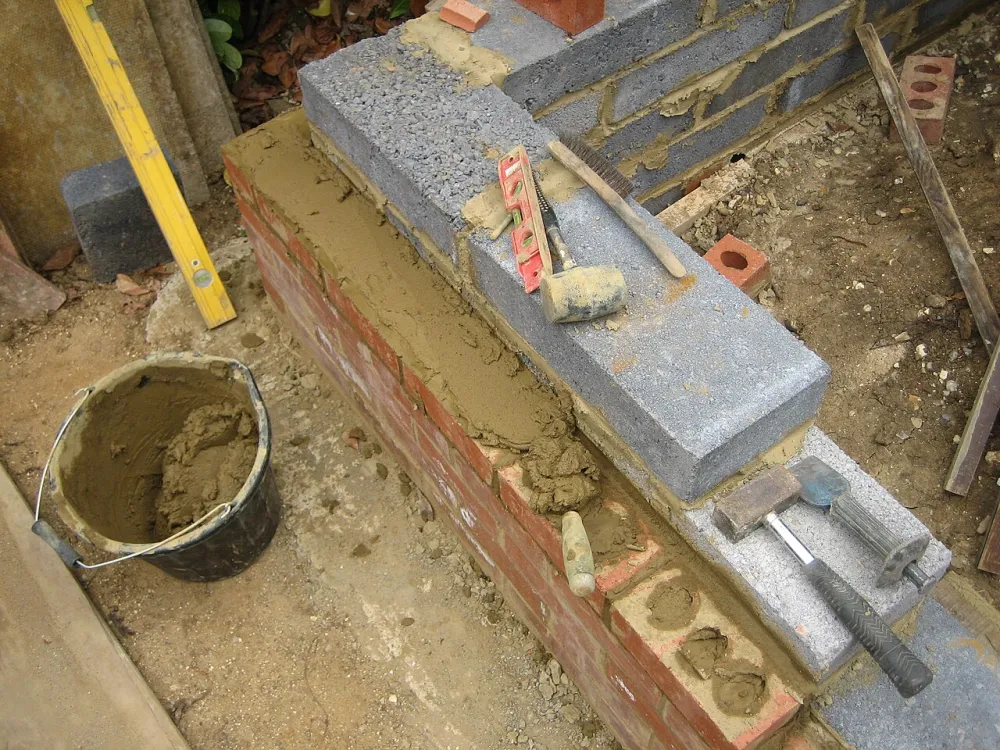
For most domestic brickwork above the damp-proof course, 5:1 building sand to cement with plasticiser is the standard mix. It bonds well, weathers well and is forgiving to work with. As a rough yield, one 25kg bag of cement gauged with sand at this ratio lays in the region of 100 to 150 bricks, though it depends on joint size and brick type. To turn a wall area into a brick count before you order, see our guide to how many bricks per square metre.
Step up to a stronger 4:1 mix where the work is more demanding: below the damp-proof course, in chimney stacks, for engineering bricks, or in exposed and heavily loaded positions. The extra cement gives more strength and durability, at the cost of breathability.
Use a weaker 6:1 mix (or a lime-gauged mix) for soft, handmade or reclaimed bricks in sheltered positions. The guiding rule is that the mortar should be no stronger than the masonry it joins, so a hard cement mortar does not stress and spall a soft brick as the wall expands and contracts.
Mixing method
- Measure your sand into the mixer or tub by the bucket.
- Add the cement at the chosen ratio and mix dry until the colour is even.
- Add water a little at a time, with the plasticiser, until you reach a smooth, plastic consistency that holds a ridge without slumping.
- Use the mortar within about two hours and never re-temper it with water once it has started to stiffen.
Blockwork mortar mix ratio
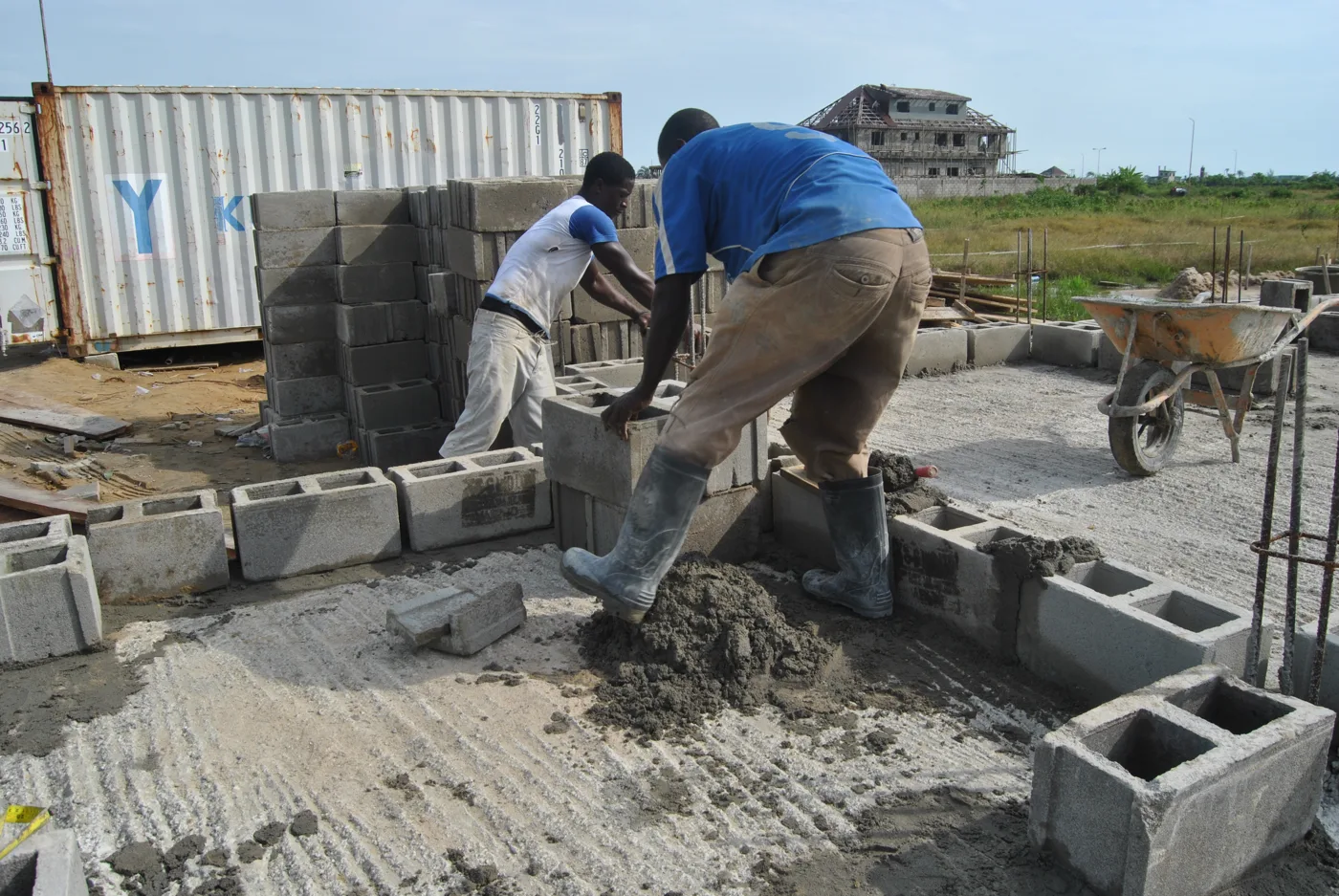
Concrete blockwork is usually laid in a 5:1 or 6:1 sand to cement mix with plasticiser, or a 1:1:6 cement:lime:sand gauged mix. Match the mortar strength to the block: dense aggregate blocks can take a stronger mix, while lightweight aircrete blocks are better with a weaker, more flexible mortar so the joints can move with the lighter, more thermally active block. If you are still choosing between block types, our guide to concrete blocks versus bricks sets out how dense and aircrete blocks differ.
Pointing and repointing mortar mix ratio
Pointing is the finishing mortar you press into the face of the joints. For modern brickwork a 4:1 to 5:1 sand to cement mix works well, mixed slightly drier than bedding mortar so it stays put while you strike the joint.
For older buildings the rules change completely. Hard cement pointing on a soft, historic wall traps moisture, forces it out through the face of the brick or stone and accelerates decay. On pre-1919 solid-wall properties, repoint with a lime mortar that matches the original, not a cement one. That is where NHL lime comes in.
NHL lime mortars for older buildings
Natural Hydraulic Lime (NHL) is sold by strength: NHL 2 (feeble), NHL 3.5 (moderate) and NHL 5 (eminent). It sets through a slow chemical reaction, stays more breathable and flexible than cement and is the standard choice for the repair of historic and solid-wall buildings.
A typical pointing or bedding mix is 1 part NHL to 2.5 parts well-graded sharp sand by volume, with NHL 3.5 being the everyday workhorse for most brick and stone repair. Choose the grade to suit exposure and the hardness of the masonry: NHL 2 for sheltered internal or soft work, NHL 5 for very exposed or wet conditions such as chimneys and copings.
If you are working on a listed building or in a conservation area, get the specification confirmed by a conservation specialist or the local conservation officer before you start. Be wary of the old “one part lime to three parts sand” rule of thumb; the right ratio depends on the actual sand grading, and an over-sanded or under-sanded mix is a common cause of failure.
Render mix ratios
Render is built up in coats, and the cardinal rule is that each coat must be weaker than the one below it. If the top coat is stronger than the backing coat, differential shrinkage pulls it off and the render cracks and delaminates.
A typical sand and cement render system:
- Scratch/backing coat: around 4:1 sharp or render sand to cement, or a 1:0.5:4.5 cement:lime:sand mix for a tougher, slightly more flexible base. Key it with a scratched surface so the next coat grips.
- Top coat: weaker, around 5:1 to 6:1, using a finer sand for a smoother finish.
Adding lime to render improves workability and helps it resist cracking. The NHBC sets out acceptable render mixes for new build, so check current NHBC guidance if the work needs to meet warranty standards. On older solid walls, use a lime render system rather than cement for the same breathability reasons as pointing.
Typical material costs
Prices move around and vary by region and supplier, but as a rough 2026 guide:
- General purpose 25kg cement: around £6 to £8 a bag at merchants and DIY sheds, cheaper by the pallet.
- Building sand: in the region of £35 to £50 for a delivered bulk (tonne) bag including VAT, less per tonne if you buy more.
- Hydrated lime 25kg: around £10 to £16 a bag.
- NHL lime is dearer than ordinary cement, which is one reason lime work costs more than a standard cement job.
Always confirm prices and availability with your local builders’ merchant before you order.
Work out exact quantities
Once you have settled on a ratio, work out exactly how many bags of cement and sand the job needs with our mortar calculator. Enter your wall area or brick count and the mix, and it returns the quantities so you order the right amount and avoid a second trip to the merchant.
FAQ
What is the best mortar mix ratio for bricklaying?
For most domestic brickwork above the damp-proof course, 5:1 building sand to cement with plasticiser is the standard mix. Drop to 4:1 for harder bricks, exposed work or below the DPC, and 6:1 (or a lime mix) for soft bricks.
What does 4:1, 5:1 or 6:1 mean?
They are the parts of sand to one part cement, by volume. So 5:1 is five buckets of building sand to one bucket of cement. Measure by the bucket or gauge box for consistency, not by the shovel.
Can I use plasticiser instead of lime?
Yes, for everyday modern brickwork. Plasticiser improves workability and frost resistance and is cheaper and quicker. Lime also adds flexibility and breathability, which is why it is preferred for softer bricks and older buildings. Use one or the other, not both in the same mix.
Why can’t I use cement mortar on an old building?
Hard cement mortar is stronger and less breathable than the soft brick or stone in a pre-1919 solid wall. It traps moisture, forces it out through the face of the masonry and speeds up decay. Use a matching NHL lime mortar instead, and check the specification with a conservation specialist.
How much does mortar cost?
It depends on the mix and quantity. As a rough 2026 guide, cement is around £6 to £8 per 25kg bag and a bulk bag of building sand is around £35 to £50 delivered, but prices vary by region and supplier so check locally.