Most UK houses use both concrete blocks and bricks, not one or the other. The standard cavity wall is a brick outer leaf you can see and a block inner leaf you cannot, tied together across an insulated gap. So the real question on site is rarely “blocks or bricks” in the abstract. It is which block, which brick, and where each one earns its place in the wall.
This guide compares the three blocks you will actually be quoted for, dense concrete, lightweight aggregate and aircrete, against facing bricks, on the things that decide a job: strength, insulation, cost, weight and laying speed. All the figures below are typical UK ranges for 2026 and move with region, supplier and order size, so treat them as a starting point for your own quotes rather than a fixed price.
The quick answer
- Facing bricks are for the visible outer leaf and anything that has to look finished: the elevation you see from the street, garden walls, piers and detail work.
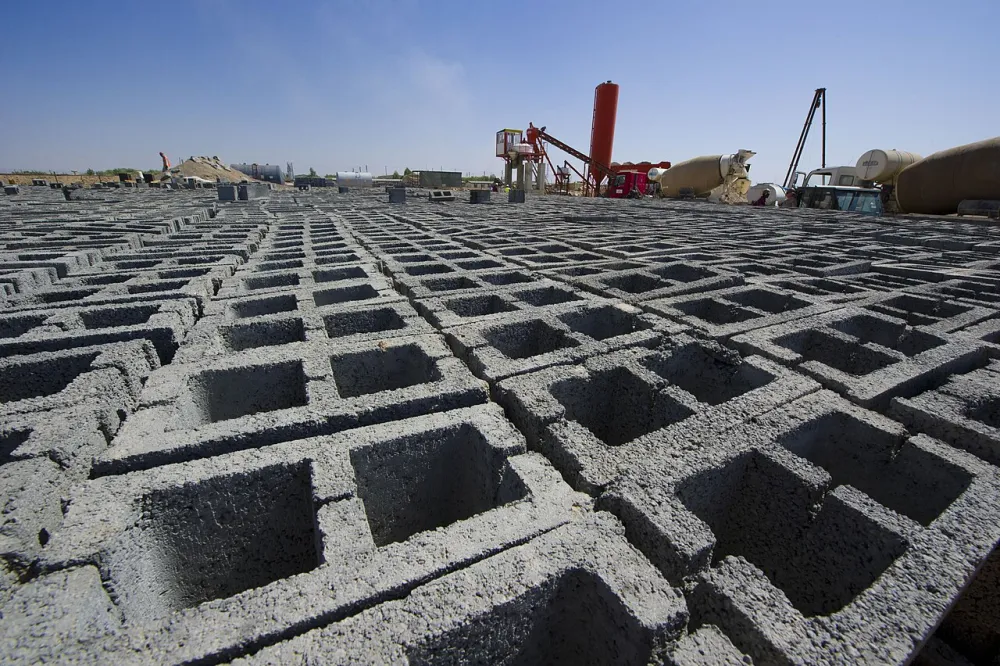
- Dense concrete blocks are the workhorse for strength: below damp proof course (DPC), foundations, retaining walls, party walls and anywhere loading or durability matters more than insulation.
- Aircrete (aerated) blocks are the go-to inner leaf in modern housing because they insulate far better than dense block and are light enough to lay fast.
- Lightweight aggregate blocks sit in the middle, a sensible all-rounder when you want more strength than aircrete but better insulation than dense.
At a glance
| Material | Typical price | Insulation | Best used for |
|---|---|---|---|
| Facing brick | 70p to £1.20 a brick | Poor; chosen for looks, not warmth | Visible outer leaf, garden walls, piers and detail work |
| Dense concrete block | £2.40 to £3.00 (solid 100mm) | Poor; 0.70 to 1.28 W/mK | Below DPC, foundations, retaining and party walls |
| Lightweight aggregate block | Between dense and aircrete | Middling; 0.25 to 0.60 W/mK | External and internal walls under moderate load, beam-and-block floors |
| Aircrete block | £1.80 to £2.50 a block | Best of the common blocks; 0.09 to 0.20 W/mK | Insulating inner leaf, fast laying, non-loadbearing partitions |
What you are actually choosing between
Facing bricks
A standard UK brick is 215 x 102.5 x 65mm. Facing bricks are made to be seen, so you pay for appearance and a hard, weather-resistant face. Typical merchant prices run from about 70p to £1.20 per brick depending on type, with handmade, reclaimed and specials costing much more.
You need roughly 60 bricks per square metre of single-leaf wall, so the brick itself is the most expensive way per square metre to build a plain wall. Bricks earn that cost on the parts of the build that show.
Dense concrete blocks
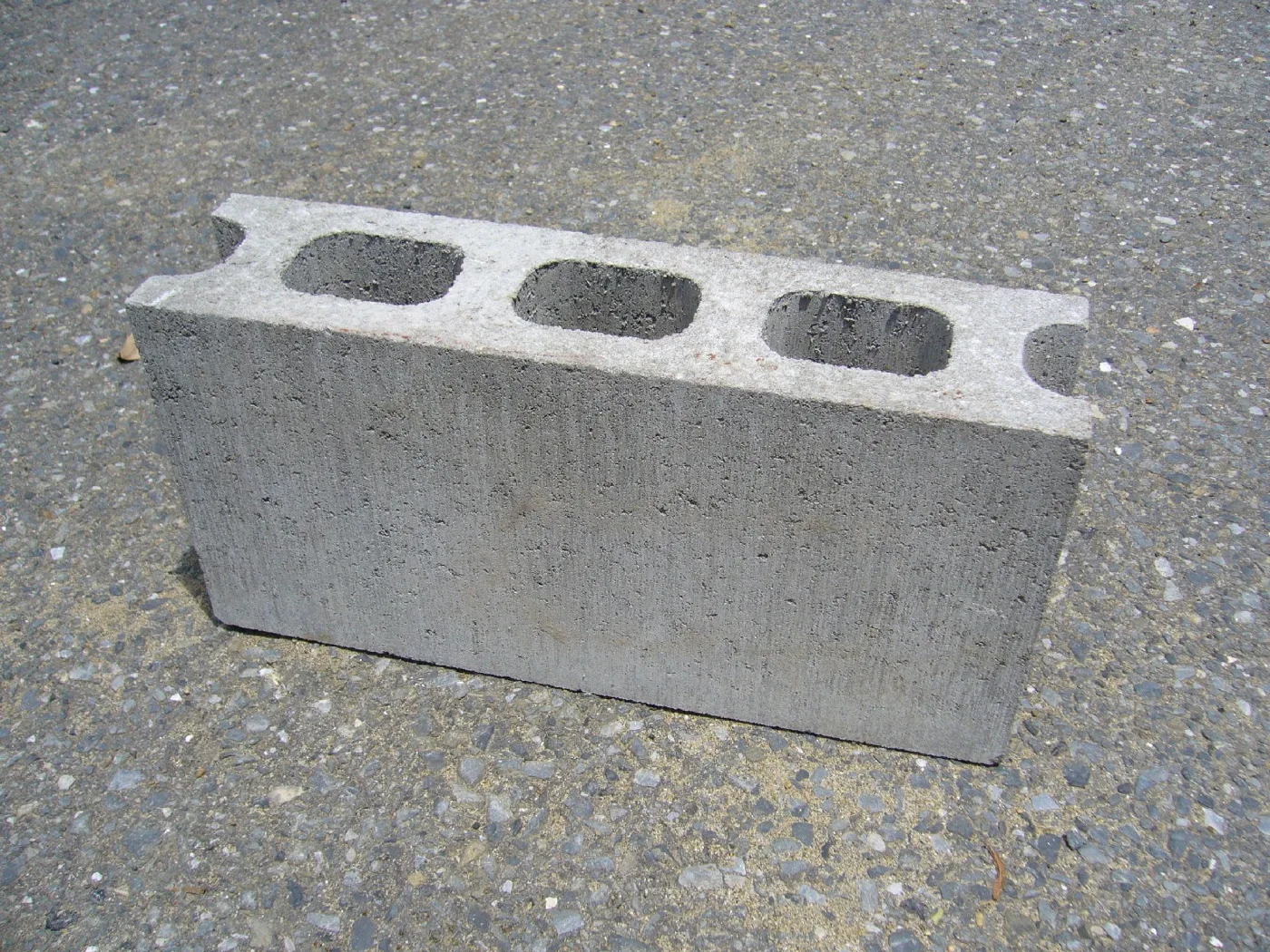
Dense aggregate blocks are the heavy, strong ones. A 100mm dense block weighs around 19kg, against roughly 7.6kg for the aircrete equivalent, which tells you most of what you need to know about handling them. Thermal conductivity is high, in the region of 0.70 to 1.28 W/mK, so they are poor insulators but excellent where you need compressive strength and resistance to ground moisture and freeze-thaw.
Indicative prices: about £2.40 to £3.00 for a solid 100mm dense block, and roughly £4.00 to £5.50 for a 215mm hollow dense block.
Lightweight aggregate concrete blocks
These use a lighter aggregate, so they are easier to handle than dense block and insulate better, with thermal conductivity around 0.25 to 0.60 W/mK. They take a fixing better than aircrete and carry reasonable load, which makes them a common choice for external and internal walls under moderate loading and for beam-and-block floors, one of the two usual ways to build a suspended ground floor alongside a timber joist floor. They tend to sit between dense and aircrete on price.
Aircrete (aerated) blocks
Aircrete, the trade often calls it by brand names like Thermalite or Celcon, is foamed so it is full of tiny air pockets. That makes it light and gives it the best insulation of the common blocks, with thermal conductivity roughly 0.09 to 0.20 W/mK depending on grade. Put another way, an aircrete block can be close to ten times more insulating than a dense block of the same thickness.
Indicative price is about £1.80 to £2.50 per standard block. The trade-off is that aircrete is softer and more brittle: ordinary plugs can pull out, so heavy fixings need the right plug or a chemical resin fixing, and it chips more easily if handled roughly.
Strength: read the grade, not the material
Concrete blocks are sold by compressive strength class, and the class matters more than whether a block is “dense” or “aircrete”. The usual UK classes are:
- 3.6 N/mm²: non-loadbearing internal partitions, or internal leaves not at risk from frost.
- 7.3 N/mm²: typical loadbearing external walls in low-rise housing, and the minimum normally specified for an external leaf below DPC.
- 10.4 N/mm² and above: foundations, walls below DPC in tougher conditions, retaining walls and multi-storey or commercial loading.
Aircrete is made in higher-strength grades too, so it can be loadbearing in two, three and even four storey homes when specified correctly. The point is to match the block class to its position in the wall and the loads on it, and to follow the structural engineer’s spec rather than picking by material name. The NHBC Standards and the block manufacturers’ technical sheets set out exactly what is acceptable below DPC and in loadbearing walls.
Bricks, by contrast, are extremely durable in the face but are an expensive way to carry load over a large area, which is why blocks do the structural heavy lifting behind them.
Insulation: where aircrete wins
If you are building to current UK energy standards, the inner leaf usually wants to help the wall hit its U-value, not fight it. That is why aircrete dominates the inner leaf: its low thermal conductivity reduces heat loss through the wall and softens thermal bridging at junctions like jambs and lintels. Lightweight aggregate block is the next best. Dense block is the weakest insulator of the three, which is fine below DPC where insulation is not the job, but a poor choice for an inner leaf you are trying to keep warm.
Bricks are dense and not chosen for insulation. In a cavity wall the insulation comes from the cavity fill or partial fill plus the block inner leaf, not from the brick.
Cost and build speed in the real world
Per square metre, supply-only material costs for blockwork in 2026 tend to land around:
- Standard dense blockwork: roughly £35 to £45 per m²
- Lightweight blockwork: roughly £45 to £55 per m²
- Aircrete blockwork: roughly £55 to £65 per m²
Those include mortar. A plain brick face is dearer again per square metre because you are laying around 60 small units instead of about ten blocks.
Speed is the other half of the cost. A bricklayer might lay roughly 400 to 600 facing bricks in a good day, but only a fraction of that wall area, because each brick is small. Blocks cover ground far faster: one block can replace around six bricks of face area, and aircrete’s light weight speeds laying further and reduces fatigue. That labour saving is a big reason aircrete and block inner leaves are standard, even though aircrete costs more per block than dense.
Bricklayer day rates themselves vary widely by region, commonly quoted from roughly £180 up to £300 a day, and higher in busy areas, so always price labour locally.
How each is used in a typical UK wall
- Below ground and below DPC: dense concrete blocks, normally 7.3 N/mm² or stronger, for strength and resistance to ground moisture and frost.
- Outer leaf above DPC: facing bricks, or a render-grade block where the finish will be rendered.
- Inner leaf above DPC: aircrete (or lightweight aggregate) blocks for insulation and fast laying.
- Internal walls: loadbearing internal walls in block to the engineer’s class; non-loadbearing partitions often 3.6 N/mm² aircrete or stud.
- Garden and boundary walls, piers, visible features: brick, because it is the finish.
How to choose for your job
- Decide what the wall has to do. Carry load, resist ground moisture, insulate, or look finished. That points you at the material before price does.
- Pick the block class from the structural spec, not from the material name. Below DPC and loadbearing walls have minimum strengths for a reason.
- Put insulation where it counts. Aircrete or lightweight on the heated inner leaf, dense where insulation is not the job.
- Cost the whole wall, not the unit. A cheaper block that lays slower or needs more insulation can cost more installed.
- Get local quotes and confirm coverage. Prices and day rates swing by region, supplier and order size.
Work out how many you need
Once you have chosen your block, the next question is quantity, and ordering short means a second delivery while ordering long means paying to cart away the rest. Work out exact quantities for your wall with our Concrete Block Calculator, and if you are facing the wall in brick, size that up with the Brick Calculator and the sand and cement to bed them with the Mortar Calculator.
FAQ
Are concrete blocks cheaper than bricks?
Per square metre of wall, yes, usually. Blocks cover far more area per unit and lay faster, so a plain block wall is cheaper in both material and labour than the same area in facing brick. Bricks earn their cost on the parts of the build that show.
Which is stronger, a brick or a concrete block?
It depends on the grade. A facing brick is very hard and weather-resistant in the face, while dense concrete blocks are made specifically to carry structural load. For foundations and loadbearing walls you choose a block by its compressive strength class (7.3 N/mm² and up), not by whether it is brick or block.
Can I use aircrete blocks below the damp proof course?
Not by default. Below DPC the spec normally calls for a denser, stronger block, commonly 7.3 N/mm² or higher, that resists ground moisture and frost. Some aircrete products are approved for certain below-DPC uses, so check the manufacturer’s technical sheet and the engineer’s spec before ordering.
Why is aircrete used for the inner leaf and brick for the outer?
The outer leaf has to look finished and shed weather, which brick does well. The inner leaf has to insulate and lay quickly, which aircrete does well. Tying the two across an insulated cavity gives you appearance outside and warmth inside.
Do aircrete blocks hold screws and fixings?
Lightly, yes, but aircrete is soft and crumbly, so ordinary plugs can pull out under load. Use plugs made for aerated blocks for light fixings, and a chemical resin fixing for anything heavy like radiators, boilers or wall units.
Sources
- Checkatrade: Concrete block calculator and 2026 prices
- GreenSpec: Blocks compared, concrete aggregate, aircrete, clay and hemp
- Gilmore Building Supplies: Concrete block strength classes explained
- Lignacite: Using concrete blocks below DPC
- BookaBuilderUK: Brickwork cost 2026, UK bricklayer rates
Prices and figures are typical UK ranges for 2026 and vary by region, supplier and order size. Always confirm with your merchant and follow your structural engineer’s specification.